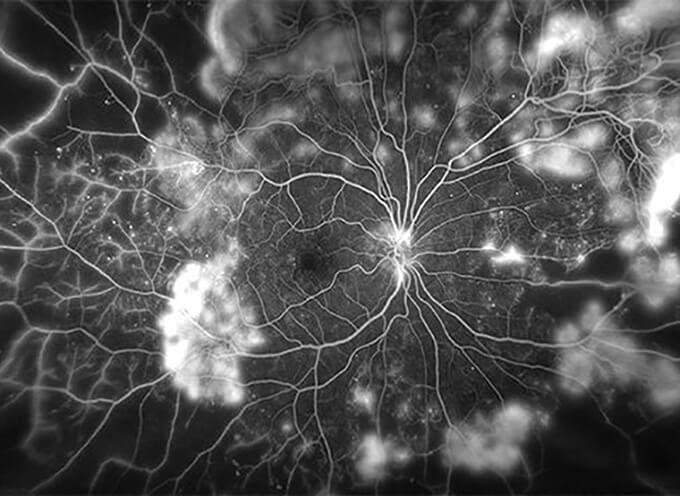
Fluorescein Angiography
Fluorescein angiography is an imaging technique that highlights the circulation of the retina using a series of rapid-sequence photographs or video imaging. Fluorescein sodium, a diagnostic dye, is injected through a small butterfly needle into a vein in the arm. Within seconds, a series of photographs or video is taken to document the circulation of the dye through the arteries and veins in the retina. Leakage, blockage and other vascular abnormalities may be disclosed which can aid in the diagnosis and evaluation of many retinal conditions. Although complications and side effects are rare with fluorescein sodium they include inflammation, pain or bruising at the injection site and more rarely, itching, hives, breathing difficulties or even more severe allergic reactions. The fluorescein sodium dye may give a yellowish tint to the patient’s skin and it usually turns urine a bright yellow or orange color for 24 to 36 hours. If undergoing fluorescein angiography patients are urged to alert their physician and photographer of any know allergies to iodine, shellfish or contrast dyes. Fluorescein angiography usually takes about 10 minutes.